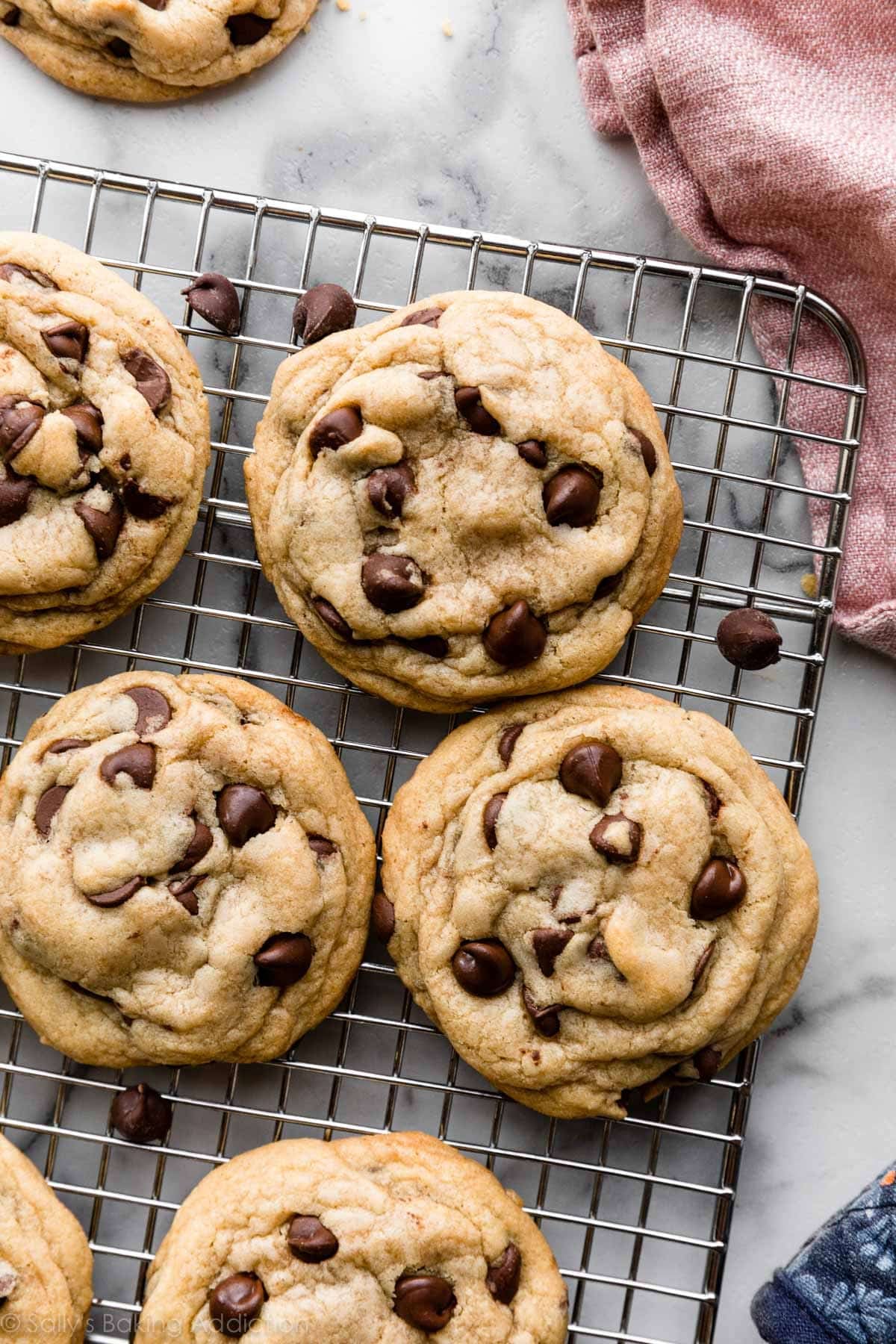
Melted Butter Secret: Ultra-Thick, Soft Chocolate Chip Cookies
The quest for the perfect classic chocolate chip cookies is a culinary journey many embark on, seeking that elusive balance of gooey center, chewy edges, and rich chocolate pockets. Often, home bakers face challenges like flat, overly crispy cookies or dough that's difficult to manage. What if we told you the secret to achieving those coveted ultra-thick, divinely soft chocolate chip cookies lies in a simple, often overlooked technique: melting all your butter? Forget about tedious chilling or waiting for butter to soften to exact room temperature. This approach simplifies the process while elevating the texture to pure perfection, making it an ideal "house recipe" for any occasion.
This method transforms the humble classic chocolate chip cookies into decadent bricks of buttery dough, studded generously with chocolate, ready to be devoured with a tall glass of milk. It’s a game-changer for anyone who has struggled with inconsistency or craved that bakery-style heft in their homemade treats. Get ready to discover a cookie experience that is not only easier to achieve but arguably more satisfying than traditional methods.
The Game-Changing Power of Melted Butter in Classic Chocolate Chip Cookies
Traditional chocolate chip cookie recipes often call for creaming softened butter with sugar. While effective for creating a light, airy crumb, this method can sometimes lead to thinner cookies if the butter isn't at the exact right temperature or if over-creamed. Our secret weapon? Fully melted butter. This simple alteration is the cornerstone of achieving an incredibly thick, soft, and chewy texture without any fuss.
Why Melted Butter Makes a Difference
When butter is completely melted, it interacts differently with the other ingredients, particularly the sugars. Unlike softened butter, which incorporates air when creamed, melted butter coats the sugar granules more thoroughly. This results in less air in the dough, leading to a denser, chewier cookie rather than a cake-like one. The fat molecules in melted butter distribute more evenly, inhibiting excessive gluten development in the flour, which further contributes to a tender, soft texture.
Moreover, the moisture content from the melted butter contributes to a richer flavor profile and a softer crumb that lasts longer. It’s a scientific marvel in your mixing bowl: a method that prioritizes moisture and even fat distribution to create a cookie that is robust, satisfyingly dense, and incredibly soft from edge to center. This is key to differentiating these from typical classic chocolate chip cookies.
Simplicity Meets Superiority
One of the greatest benefits of the melted butter approach is the sheer convenience. No more planning hours ahead to let butter come to room temperature, or guessing if it's "softened enough." You simply melt it in the microwave or on the stovetop, let it cool for a few minutes, and you're ready to proceed. This lazy-sensible method doesn't compromise on quality; in fact, it enhances it, making this a go-to recipe for spontaneous baking sessions.
Crafting Your Ultra-Soft, Thick Cookies: A Step-by-Step Guide
This recipe is designed to be your stress-free ticket to incredible classic chocolate chip cookies. Each step is straightforward, building towards a dough that yields unbelievably thick and tender results.
The Foundation: Butter and Sugar Symphony
Start by melting your butter. Once melted, let it cool for about 5-10 minutes. This slight cooling prevents it from cooking your eggs later and allows it to incorporate better with the sugars. In a large bowl, combine the cooled melted butter with both brown and white sugars. The blend of sugars is crucial: brown sugar brings moisture, chewiness, and a slight caramel note, while white sugar contributes to spread and that desirable slightly crisp edge. Beat this mixture until it's light, fluffy, and creamy. This aeration, despite using melted butter, still helps create structure.
The Wet Ingredients: Eggs and Vanilla
Next, gently mix in the eggs and a generous splash of vanilla extract. It’s important not to over-beat the eggs; mix them just until combined. Overmixing at this stage can lead to tougher cookies as it develops gluten unnecessarily. The vanilla, meanwhile, isn't just a flavor enhancer; it elevates the entire cookie experience, deepening the rich buttery and chocolate notes.
Marrying Dry with Wet
In a separate bowl, whisk together your dry ingredients: all-purpose flour, baking soda, and salt. Flour provides the structure for your cookies, baking soda acts as a leavening agent promoting lift and browning, and salt balances the sweetness, enhancing all the flavors. Gradually add the dry ingredients to the wet mixture, mixing on low speed until *just* combined. Avoid overmixing, as this can activate too much gluten, resulting in dry, tough cookies. This is also the stage where you can adjust the flour content if your dough feels too wet or sticky, adding a tablespoon at a time until it's workable but still soft. For more tips on consistency, refer to our guide on
Bake The Best Soft Chocolate Chip Cookies: No Chill Recipe.
The Star: Chocolate Chips!
No classic chocolate chip cookies are complete without the chocolate! Fold in your favorite chocolate chips, chunks, or even a blend of different types (dark, milk, semi-sweet, white) until evenly distributed. Using high-quality chocolate makes a noticeable difference in the final taste and texture, providing melty pockets of pure bliss.
The Bake: Patience is Key
Roll your dough into generous balls and place them on a baking sheet lined with parchment paper. This recipe is wonderfully forgiving and requires no chilling! Bake in a preheated oven until the edges are just set and lightly golden, but the centers still look slightly soft and underdone. This is perhaps the most critical step for achieving ultra-soft cookies. Pull them out of the oven a minute or two earlier than you think they need, as they will continue to bake slightly on the hot pan. Overbaking is the arch-nemesis of a soft, chewy cookie.
Mastering the Art: Troubleshooting and Tips for Perfect Classic Chocolate Chip Cookies
Even with the best recipe, baking can sometimes throw curveballs. Here are some insights to help you perfect your classic chocolate chip cookies every time.
Preventing the Dreaded Flat Cookie
The primary culprits behind flat cookies are usually too much moisture, not enough structure, or excessive spread. With this melted butter recipe, ensure your butter is slightly cooled, not piping hot. The most common fix, as highlighted by our source, is often adding enough flour. If your dough feels overly wet and sticky, incorporate an extra few tablespoons of flour until it has a pliable, but still soft, consistency. Another factor is not overbaking, as prolonged heat can cause excessive spreading. For a deep dive into common issues and solutions, check out our comprehensive guide on how to
Prevent Flat Cookies: Guide to Ultra-Soft Chocolate Chip Success. Correct oven temperature also plays a role – an oven that’s too cool can cause cookies to spread too much before setting.
Beyond the Basics: Customization and Enhancements
While these classic chocolate chip cookies are perfect as is, feel free to experiment:
*
Flaky Sea Salt: A sprinkle of flaky sea salt on top before baking enhances the chocolate flavor and adds a gourmet touch.
*
Chocolate Variety: Mix dark chocolate chunks with semi-sweet chips for a more complex flavor profile.
*
Add-ins: Incorporate chopped nuts (pecans, walnuts), toffee bits, or even a swirl of peanut butter for extra dimension.
*
Cookie Size: Larger cookie scoops will yield truly impressive, thick cookies that take slightly longer to bake but offer a wonderful chew.
Storage and Reheating for Lasting Freshness
Store your baked cookies in an airtight container at room temperature for up to 3-4 days. They remain wonderfully soft. If you want to savor that fresh-from-the-oven experience, gently warm them in the microwave for 10-15 seconds, or in a low oven (around 250°F / 120°C) for 5-7 minutes. You can also freeze scooped dough balls for future baking. Simply place them on a baking sheet to freeze solid, then transfer to a freezer bag. Bake from frozen, adding a few extra minutes to the baking time.
Embrace the melted butter secret, and you'll unlock a world of ultra-thick, soft, and utterly irresistible classic chocolate chip cookies. This recipe isn't just easy; it consistently delivers that perfect bakery-style chew and rich flavor that makes every bite a moment of pure bliss. Make it your signature, and prepare for endless compliments!